
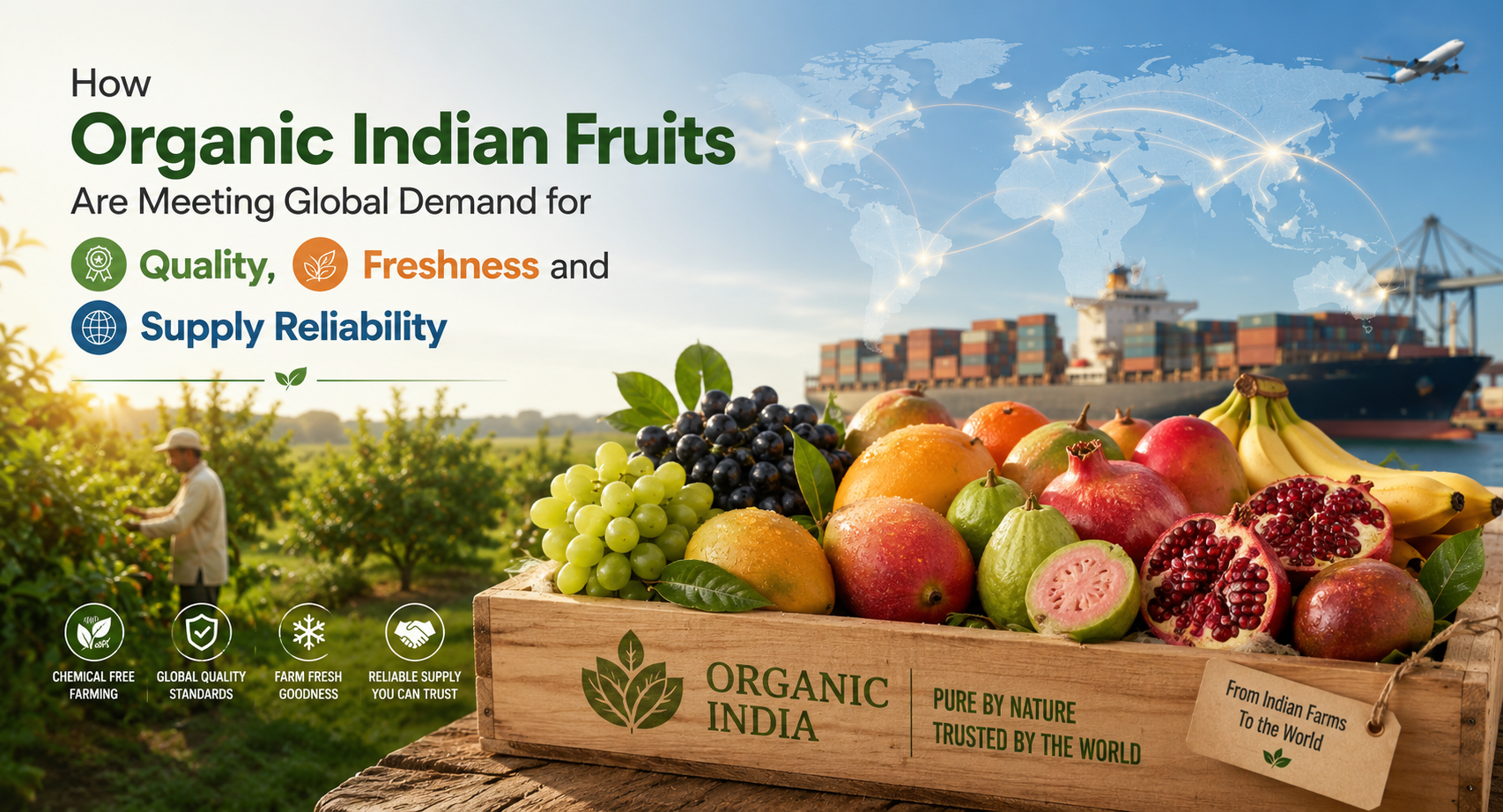
Global demand for organic fruits continues to grow across retail, food service and food manufacturing industries. Yet many importers face a challenge that rarely appears in market reports: finding suppliers who can consistently deliver freshness, quality and reliability — shipment after shipment.
A single successful shipment can secure an order. Consistent quality is what builds long-term business relationships.
This is one reason why international buyers are increasingly turning their attention toward India. Known for its agricultural diversity and extensive fruit production, India offers not only premium-quality fruits but also the growing export capabilities required to serve global markets efficiently.
From mangoes and bananas to pomegranates, grapes and citrus fruits, Indian produce is reaching consumers across continents. As demand for organic and responsibly sourced products continues to expand, India’s fruit export sector is becoming an increasingly important part of the global fresh produce supply chain.
For importers, distributors and retailers, the opportunity is no longer simply about sourcing fruit. It is about securing dependable supply partners capable of maintaining quality, consistency and trust over the long term.
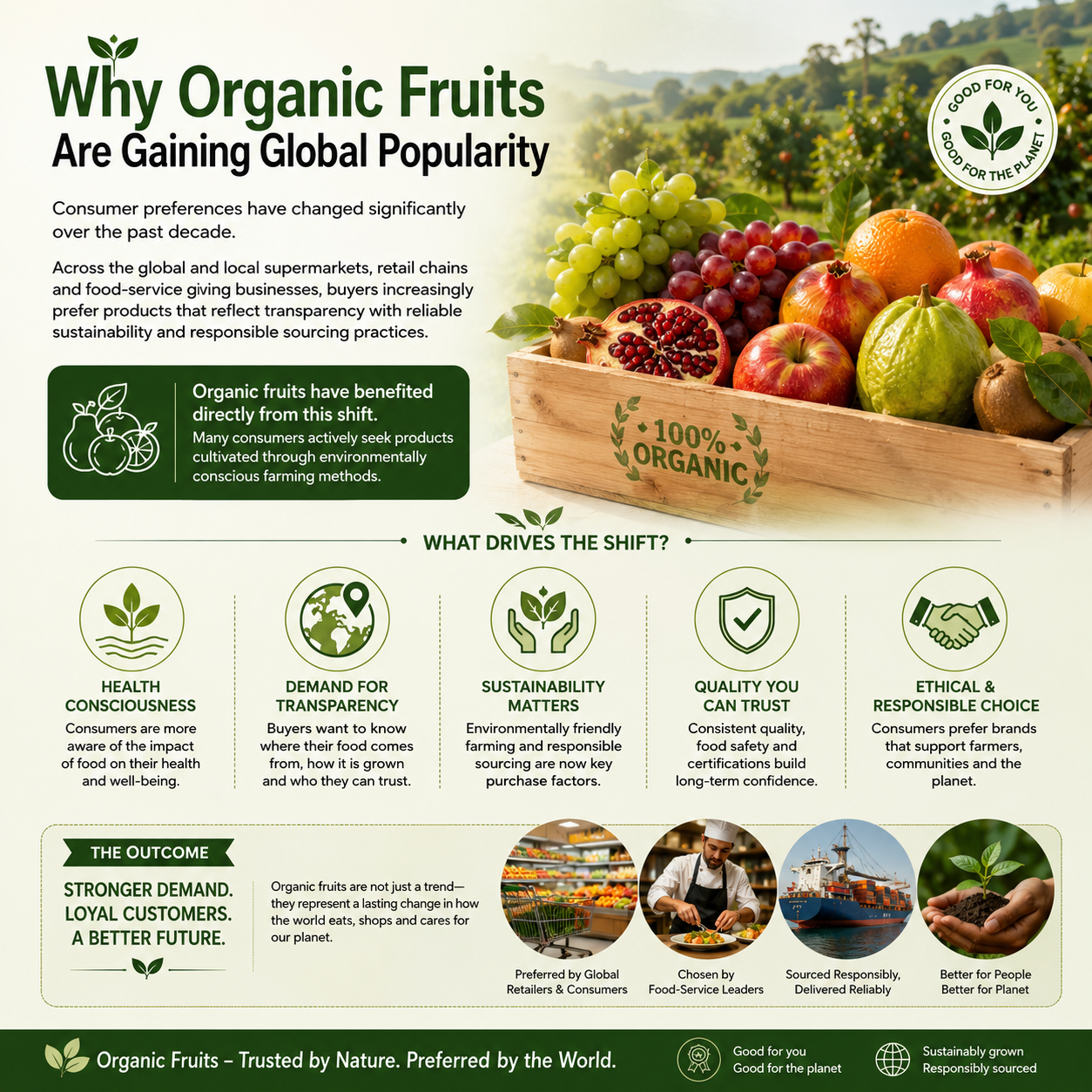
Why Organic Fruits Are Gaining Global Popularity
Consumer preferences have changed significantly over the past decade. Across global and local supermarkets, retail chains and food-service businesses, buyers increasingly prefer products that reflect transparency, reliable sustainability and responsible sourcing practices.
Organic fruits have benefited directly from this shift. Many consumers actively seek products cultivated through environmentally conscious farming methods. They want to know where products originate, how they are grown and whether suppliers maintain consistent quality standards.
This trend has become particularly visible across Europe, North America, the Middle East and Asia-Pacific markets where demand for premium organic produce continues to increase. For importers, this creates both an opportunity and a challenge. While demand is growing, maintaining reliable access to quality produce has become more important than ever.
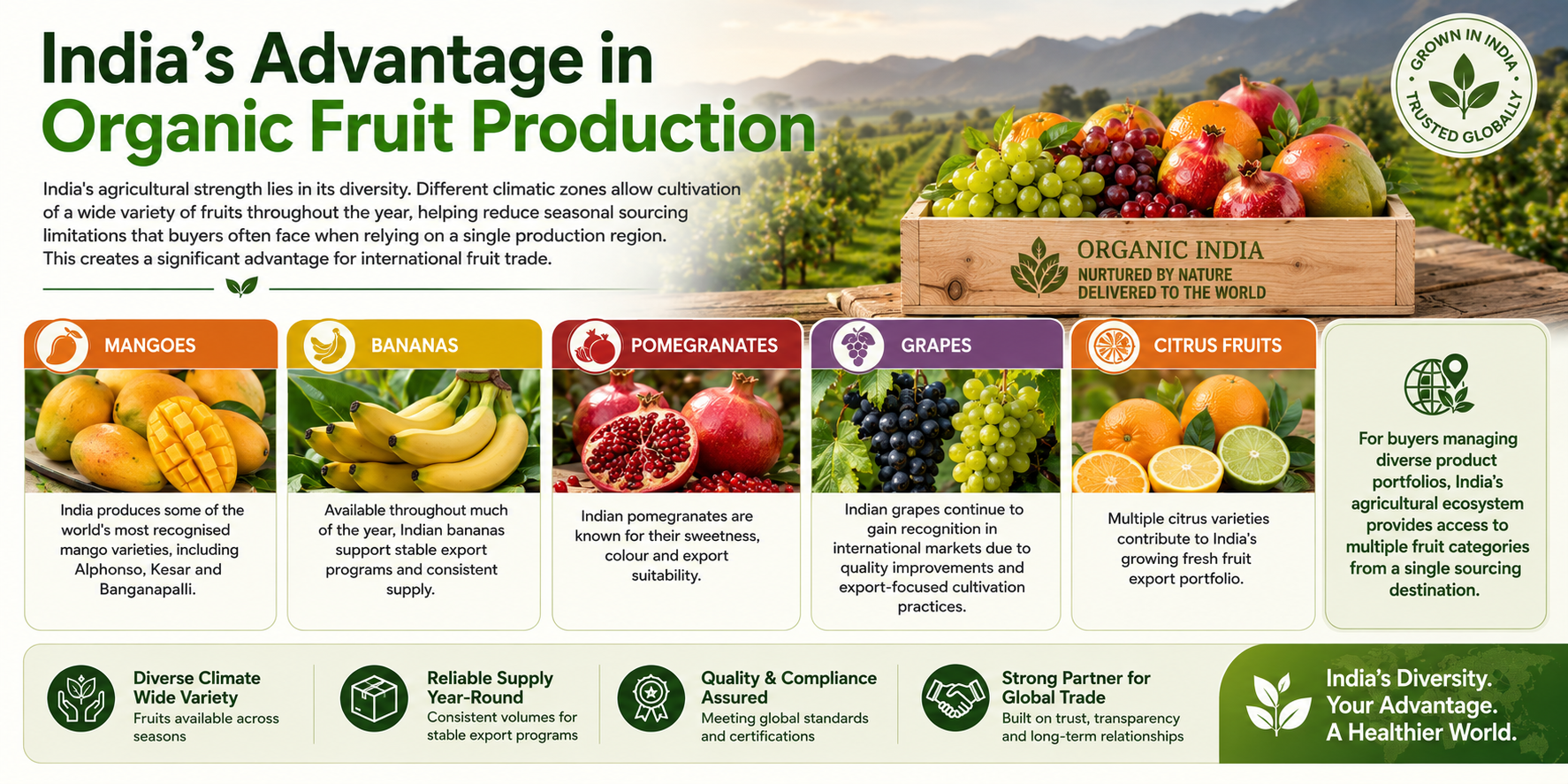
India’s Advantage in Organic Fruit Production
India’s agricultural strength lies in its diversity. Different climatic zones allow cultivation of a wide variety of fruits throughout the year, helping reduce seasonal sourcing limitations that buyers often face when relying on a single production region. This creates a significant advantage for international fruit trade.
Alphonso, Kesar, Banganapalli
Year-round stable supply
Sweet, colourful, export-ready
International quality standards
Diverse varieties, growing portfolio
For buyers managing diverse product portfolios, India’s agricultural ecosystem provides access to multiple fruit categories from a single sourcing destination.
Popular Organic Indian Fruits in Global Markets
While India produces a broad range of fruits, several categories consistently attract strong international demand.
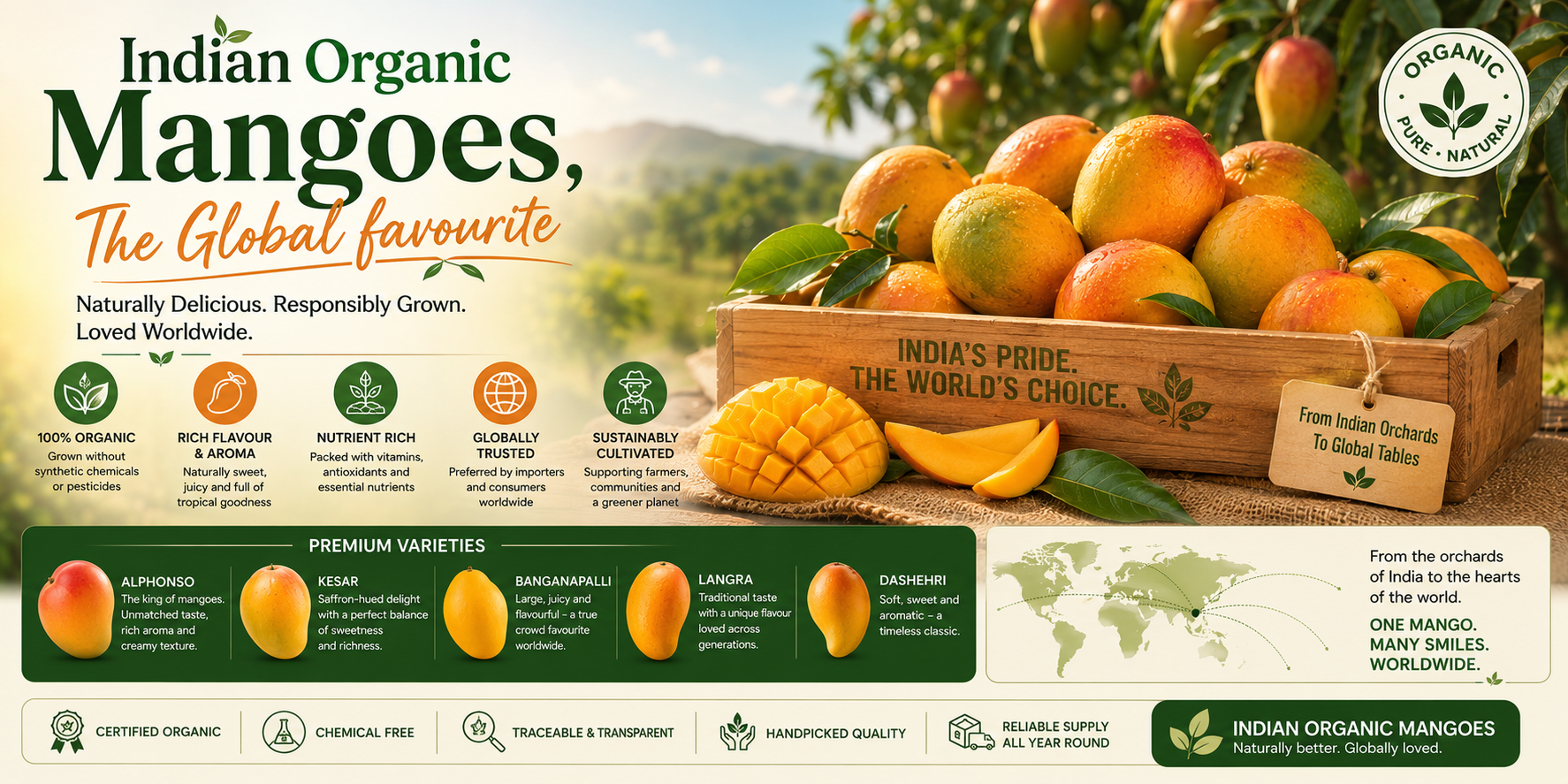
Indian Organic Mangoes — “The Global Favourite”
Often called the King of Fruits, Indian mangoes remain among the country’s most recognised agricultural exports. Their rich flavour, aroma and premium quality have created strong demand across international markets. Importers frequently seek Indian mangoes not only for taste but also for their ability to differentiate premium product offerings.
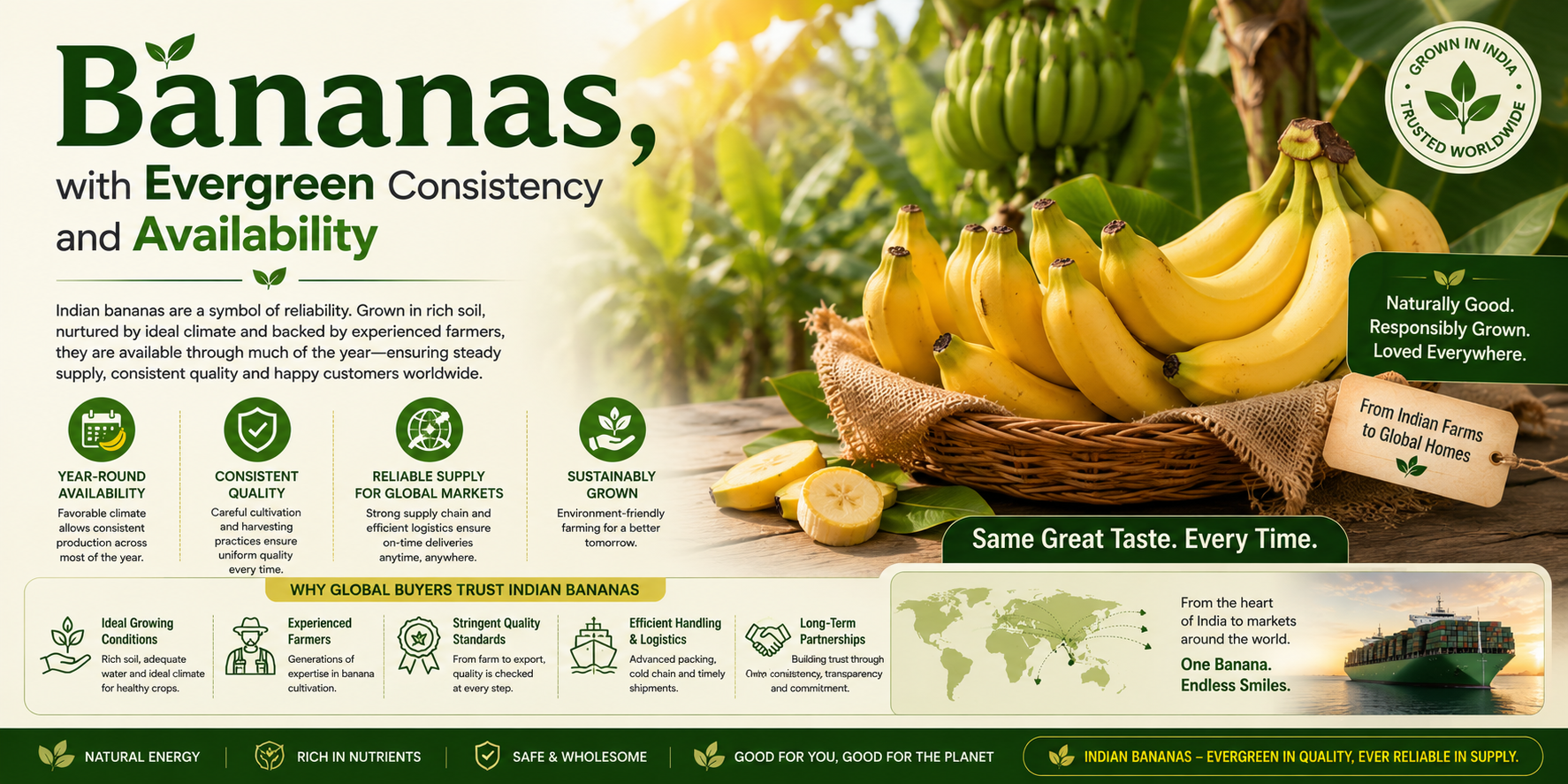
Bananas — Evergreen Consistency and Availability
Bananas represent one of India’s most important fruit export categories. For buyers, bananas offer an important advantage: dependable availability. In international trade, consistency often matters just as much as quality. Reliable supply programs help distributors and retailers maintain inventory stability throughout the year.
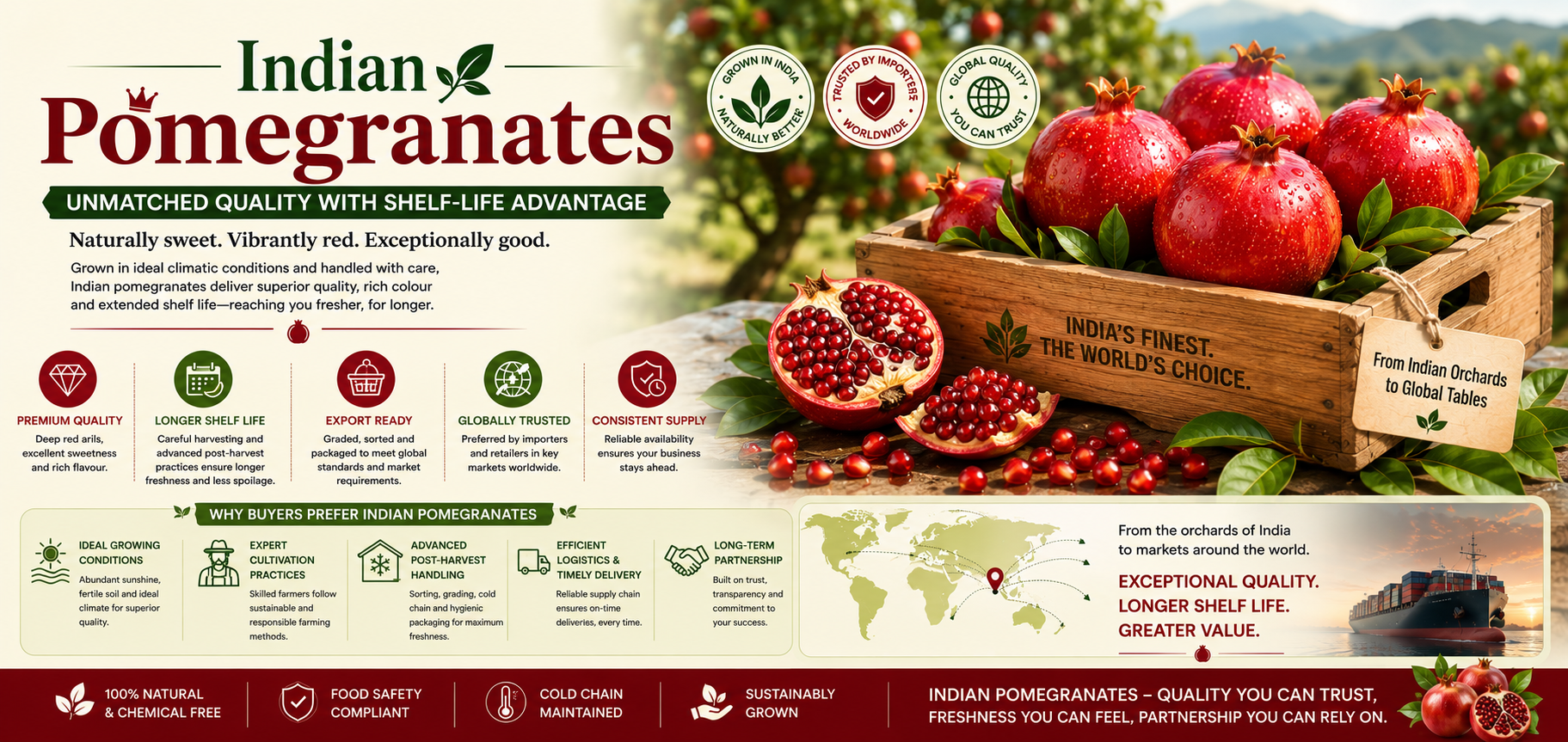
Indian Pomegranates — Unmatched Quality with Shelf-Life Advantage
Indian pomegranates are recognised for their appearance, sweetness and excellent shelf life. This combination makes them particularly attractive for international transportation where maintaining freshness is critical. For importers, strong shelf life can directly reduce waste and improve profitability.
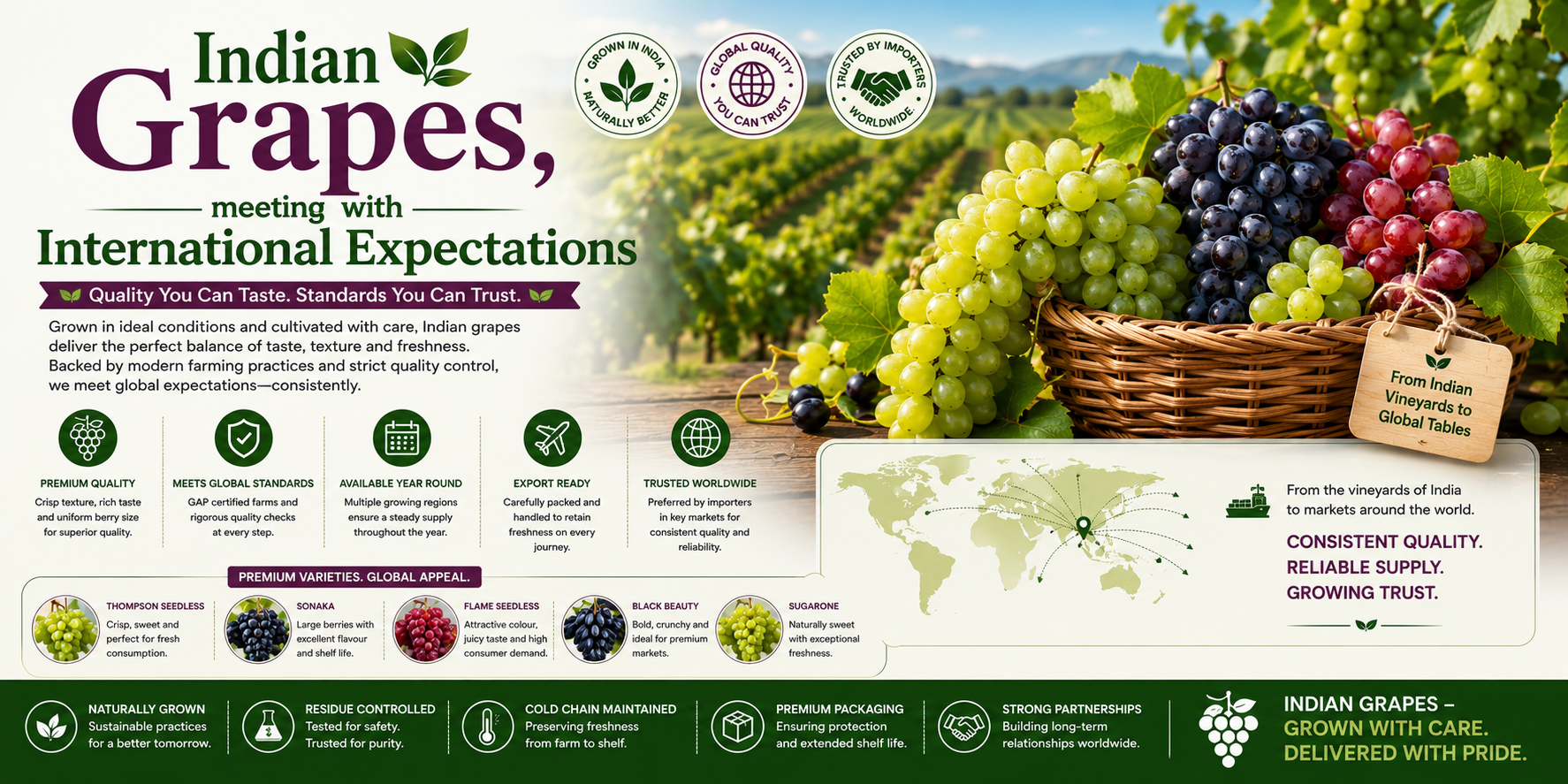
Indian Grapes — Meeting International Expectations
Indian grapes continue to gain acceptance across global markets due to improvements in cultivation practices, quality management and export readiness. Retailers and distributors value grapes that combine visual appeal, taste consistency and transportation durability, making grapes an increasingly important part of India’s fresh produce exports.
From Indian Orchards to International Buyers
High-quality fruit exports require far more than cultivation alone. The journey begins in orchards where crops are carefully monitored and harvested at optimal maturity levels. Produce then moves through sorting, grading and quality inspection processes before entering export channels.
Maintaining freshness throughout transportation requires efficient cold-chain logistics, proper packaging and careful handling procedures. For international buyers, product quality and logistics reliability are closely connected. Even the highest-quality fruit can lose value if supply chains fail to maintain freshness during transit.
This is why experienced organic fruit exporters place significant emphasis on packaging, documentation, quality assurance and logistics coordination.
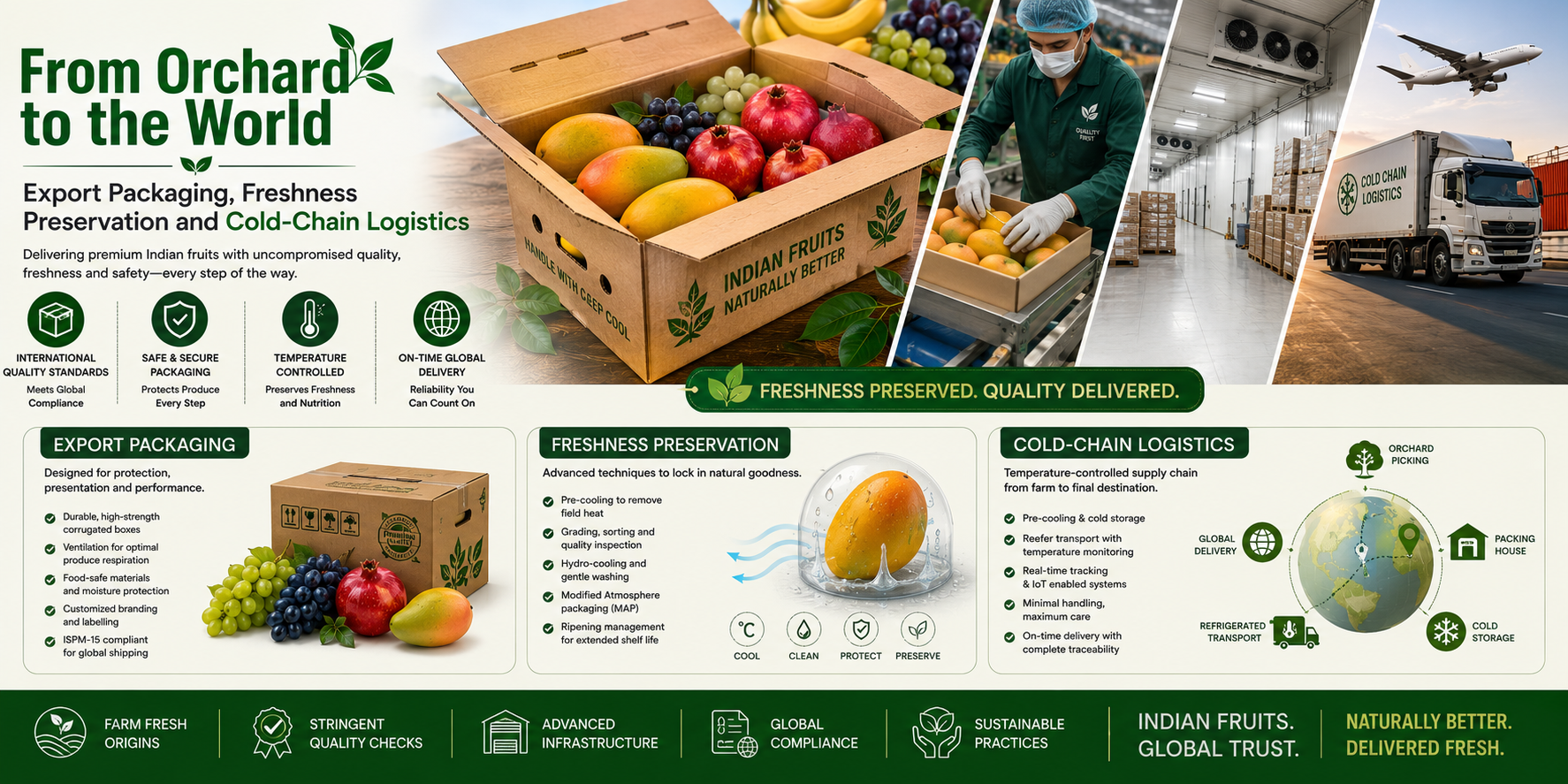
Export Packaging, Freshness Preservation and Cold-Chain Logistics
In international fruit trade, maintaining freshness is just as important as producing high-quality fruit. Fresh fruits are highly sensitive products. Temperature fluctuations, improper handling and inadequate packaging can significantly affect appearance, shelf life and overall market value by the time products reach their destination.
To minimise these risks, export-oriented fruit supply chains rely on carefully designed packaging and cold-chain logistics systems. Export packaging serves multiple purposes — it helps protect fruits during transportation, reduces physical damage and supports proper ventilation throughout the journey. Packaging materials and configurations are often selected based on the specific fruit variety, transit duration and destination market requirements.
Cold-chain management plays an equally important role. Maintaining controlled temperatures from harvest through storage, transportation and final delivery helps preserve freshness, texture and nutritional quality. This process becomes especially critical for products such as grapes, pomegranates and mangoes that may travel long distances before reaching distributors or retailers.
For international buyers, effective packaging and freshness preservation measures contribute directly to product quality, reduced spoilage and improved customer satisfaction. Reliable exporters understand that successful fruit exports depend not only on cultivation but also on maintaining product integrity throughout the entire supply chain.
The Real Cost of Poor Freshness Management
After speaking with buyers, importers and distributors, a clear pattern emerges: most sourcing challenges don’t begin at the farm. They begin after harvest. A supplier may offer excellent mangoes, grapes, pomegranates or bananas — but if packaging is poor, cold-chain logistics fail or transit conditions aren’t controlled, product quality can deteriorate long before reaching the destination market.
For fruit buyers, the real cost isn’t paying a few cents more per kilogram. The real cost is:
- Product spoilage
- Reduced shelf life
- Customer complaints
- Retail rejection
- Lost market confidence
What International Fruit Buyers Look For
Today’s buyers evaluate suppliers using a broader set of criteria than ever before. Key considerations often include:
- Consistent quality
- Reliable supply capability
- Product traceability
- Organic sourcing options
- Export documentation support
- Packaging standards
- Shelf life performance
- Communication and responsiveness
Importers increasingly seek partners who understand both product quality and the operational realities of international trade. The ability to deliver consistently often becomes the defining factor in long-term supplier relationships.
Why Global Buyers Continue to Choose India
India offers several competitive advantages that support international sourcing strategies. The suppliers who will lead the next decade of agricultural exports won’t simply be those who produce the best fruits — they will be those who can consistently protect quality throughout the entire supply chain.
- Diverse fruit varieties
- Multiple harvest seasons
- Strong agricultural expertise
- Competitive production capabilities
- Expanding organic farming sector
- Established export infrastructure
- Access to global shipping routes
- Growing cold-chain capabilities
These strengths help buyers reduce sourcing risk while maintaining access to premium agricultural products.
Why Partner with Chirak Exim
At Chirak Exim, we understand that successful exports depend on much more than product availability. International buyers require confidence in sourcing, quality management, logistics and communication. Our focus is on connecting global markets with premium agricultural products sourced through trusted supply networks across India.
- Quality-focused sourcing
- Export-ready packaging
- Reliable documentation
- Timely communication
- Supply consistency
- Long-term business relationships
Whether sourcing mangoes, bananas, pomegranates, grapes or other agricultural products, our objective is to help buyers build dependable supply chains supported by trusted partnerships.